What is IPTV? It sounds like IT jargon, but it’s simple. In short: IPTV (Internet Protocol Television) is television over the internet, so the signal arrives via your internet connection instead of antenna, cable, or satellite. Verivox also describes IPTV as television over the internet line (Verivox, 2026). You only need a stable line and a suitable device.
The essentials
– IPTV means Internet Protocol Television, that is, TV over the internet connection.
– It replaces antenna, cable, and satellite with a data stream using an M3U list and an EPG.
– Verivox notes only three true telco IPTV providers in Germany (Verivox, 2026).
– IPTV as a technology is neutral; what matters is the source of the content.
What is IPTV exactly?
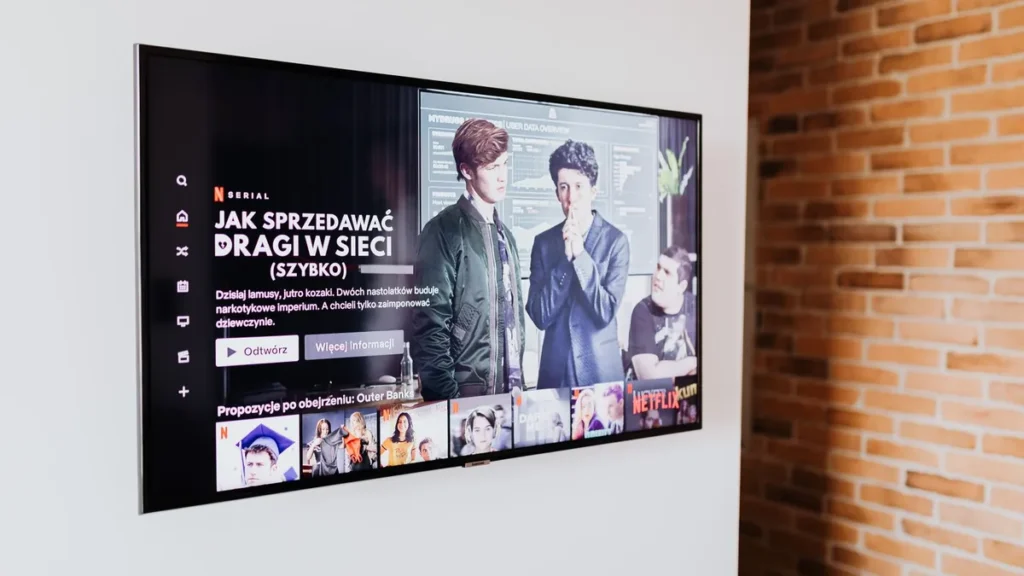
IPTV is television over the internet. The abbreviation stands for Internet Protocol Television. Instead of arriving via antenna, cable, or satellite, the signal reaches your TV over your normal internet connection.
 Illustrative image
How does IPTV work technically?
Technically, the TV signal is split into data packets and sent over the internet to your device. There a player reassembles the packets into picture and sound. That player usually uses an M3U list, a file with the channel addresses, and an EPG, the electronic program guide.
Pros and cons of IPTV
- Pro: device- and location-independent, no fixed schedule.
- Pro: large channel selection and on-demand content possible.
- Con: quality depends directly on the internet connection.
IPTV vs cable and satellite: the difference
Cable and satellite work like a radio station broadcasting to everyone at once. IPTV is more like ordering on request: it pulls the stream specifically for you:
| Feature | IPTV | Cable / Satellite |
|---|---|---|
| Delivery | over the internet | over cable or satellite |
| Requirement | stable internet line | connection or dish |
| Flexibility | device-independent | tied to a connection |
| Quality depends on | internet connection | reception quality |
What do you need for IPTV?
You need three things: a stable internet connection, a device such as a Fire TV Stick, Smart TV, or Apple TV, and a player with credentials from a provider. For more detail, including bandwidth, see what you need for IPTV. Note: IPTV as a technology is neutral; whether an offer is permitted depends on the source. For how to evaluate a provider, see how to choose an IPTV provider.
What is IPTV used for day to day?
In everyday use, people rely on IPTV mainly for live television, sport, international channels, and on-demand content on one device. Commuters and expats value the location-independent access; families often use IPTV on several devices at once. The biggest practical advantage is flexibility: you aren’t tied to a cable connection or a fixed schedule. A stable connection stays essential, because without it even the largest channel selection is little use. That’s how the technology becomes an everyday tool that replaces classic TV for many.
Frequently asked questions
What does the abbreviation IPTV stand for?
IPTV stands for Internet Protocol Television, that is, television over the internet protocol. The signal arrives via your internet connection instead of antenna, cable, or satellite.
Is IPTV the same as Netflix?
No. Netflix is a single streaming service with its own catalogue. IPTV is the general technology of delivering television over the internet, often with live channels, an M3U list, and an EPG.
Do I need a Smart TV for IPTV?
Not necessarily. A Fire TV Stick or Apple TV makes any TV with HDMI IPTV-ready. Smart TVs work too, but they’re often the trickiest devices.
Is IPTV legal?
IPTV as a technology is neutral and widely used, including by large providers. What matters is the source of the content. See our legality guide for the full picture.
Conclusion
IPTV is simply television over the internet, flexible and device-independent, but dependent on a stable connection. For how to evaluate a provider, see IPTV provider Germany.
Sources
– Verivox, IPTV: television over the internet connection, retrieved 2026-06-12, https://www.verivox.de/internet/themen/iptv/
Tags: what is IPTV, IPTV explained, how IPTV works, M3U, EPG, IPTV vs cable